HAFF Round 3: From Policy Ambition to Keys in Doors
If working in residential housing delivery, particularly in social or affordable housing, the phrase “pipeline versus delivery” likely feels uncomfortably familiar.
It can be said that Australia does not suffer from a lack of policy intent when it comes to housing. What can also be said is that Australia historically struggles with is translating policy and funding announcements into homes on the ground or keys in doors, at scale, across jurisdictions, and at a pace that matches community need.
That is why the Housing Australia Future Fund (HAFF) matters. Not as an abstract policy mechanism, but as a long-term, nationally consistent funding platform that is now – after two formative rounds – beginning to behave like a genuine delivery engine.
With HAFF Round 3 now open, there is a growing sense across the sector that this round has the potential to be materially different:
- A more workable, more realistic, more aligned with how projects are actually delivered
A National Funding Platform with Scale
At its core, the HAFF is a $10 billion investment vehicle established to support the delivery of 40,000 new social and affordable homes over five years, working alongside state, territory, community housing and private sector partners.
Rounds 1 and 2 have already committed funding to approximately 18,650 homes nationally, with projects completed, under construction, or progressing through early delivery phases.
Round 3 is intended to unlock the remaining 21,350 homes, making it the largest and most consequential funding round under the program to date.
Critically, HAFF is not state-specific. It is intentionally national in structure, enabling projects to be delivered across metropolitan, regional and growth locations, including areas where state-based funding alone has historically struggled to bridge feasibility gaps.
For providers and delivery partners operating across multiple jurisdictions, this consistency matters.
Being Honest About Rounds 1 and 2
The credibility of any funding program is not built by suggesting early stages were seamless and Rounds 1 and 2 were not.
Across the sector, it should be acknowledged that the roll out saw:
- Extended timeframes between submission, approval and contracting
- Eligibility and structuring complexity, particularly for mixed-tenure or partnership-led projects
- Viability pressures driven by construction cost escalation, interest rates and conservative risk settings
- A learning curve for all parties — including government, providers, financiers and delivery teams — as the HAFF model took shape in practice
Despite this, an important point is often overlooked: projects still progressed. Contracts were executed. Sites moved into delivery. Lessons were learned.
Importantly, Housing Australia has been open about incorporating those lessons, which is why Round 3 may feel different.
What Has Changed in Round 3
Round 3 introduces a series of refinements that directly respond to the friction experienced in earlier rounds.
Key shifts include:
- An open, on-demand, two-stage application process, replacing fixed competitive rounds
- Greater flexibility in funding package size, encouraging partnerships and scalable portfolios
- Stronger alignment with state and territory co-investment, recognising that HAFF works best when layered with local mechanisms
- A dedicated $600 million funding stream for First Nations housing, alongside support mechanisms to assist delivery capability
- Clear prioritisation of well located, value for money projects that can move to construction quickly
The emphasis has clearly shifted from theoretical merit to practical deliverability. From a project perspective, that shift is welcome.
From Funding to Delivery
As Round 3 gathers momentum, the focus inevitably changes. The question is no longer “can we secure funding?” — it becomes:
“Can we deliver, at scale, across diverse planning, procurement and construction environments?”
For community housing providers, registered housing associations, developers and builders, this raises familiar, but increasingly complex questions:
- How do we sequence multiple HAFF funded projects without overloading internal capability?
- How do we manage jurisdictional differences in planning, design assurance, procurement and reporting?
- How do we maintain cost discipline and programme certainty in a still volatile construction market?
- How do we ensure social and affordable housing outcomes are delivered without compromising quality, safety or longevity?
These are not abstract concerns. They are the issues that determine whether HAFF ultimately delivers on its promise.
Delivery Experience Matters
At Essence Project Management, we have worked in the social and affordable housing sector long before HAFF became a headline.
We have supported projects through:
- Complex government and community stakeholder environments
- Tight funding, compliance and assurance frameworks
- Live construction markets where risk must be actively managed — not simply allocated on paper
Our experience, particularly in NSW, reinforces a simple truth:
Funding enables projects. Delivery determines outcomes.
As HAFF Round 3 unfolds nationally — including in states such as Victoria where delivery pipelines are expanding rapidly — the role of capable, independent project management becomes increasingly important. Not to sell certainty, but to actively manage uncertainty.
A Maturing Sector
What gives us cautious optimism about HAFF Round 3 is not just the scale of funding, but the maturity now emerging across the sector.
Community housing providers are more confident partners.
Government agencies are clearer on expectations.
Developers and builders are adapting to longterm, purpose driven delivery models.
This creates an opportunity to lift delivery standards nationally — not by reinventing the wheel in each jurisdiction, but by applying consistent, lessons learned approaches while respecting local context. That is where sharing experience across borders adds real value.
Looking Beyond This Funding Cycle
HAFF Round 3 will not solve Australia’s housing challenge on its own. But it does represent one of the most credible, sustained attempts to align funding, policy and delivery at a national scale.
If delivery is done well — project by project, site by site — the program has the potential to leave a lasting legacy well beyond this funding cycle.
As a firm, Essence is committed to being part of that effort. Not only in NSW, but wherever capable delivery support can help turn funded projects into homes that genuinely serve their communities.
If navigating HAFF Round 3, or preparing for what comes after approval — we are always open to a conversation.
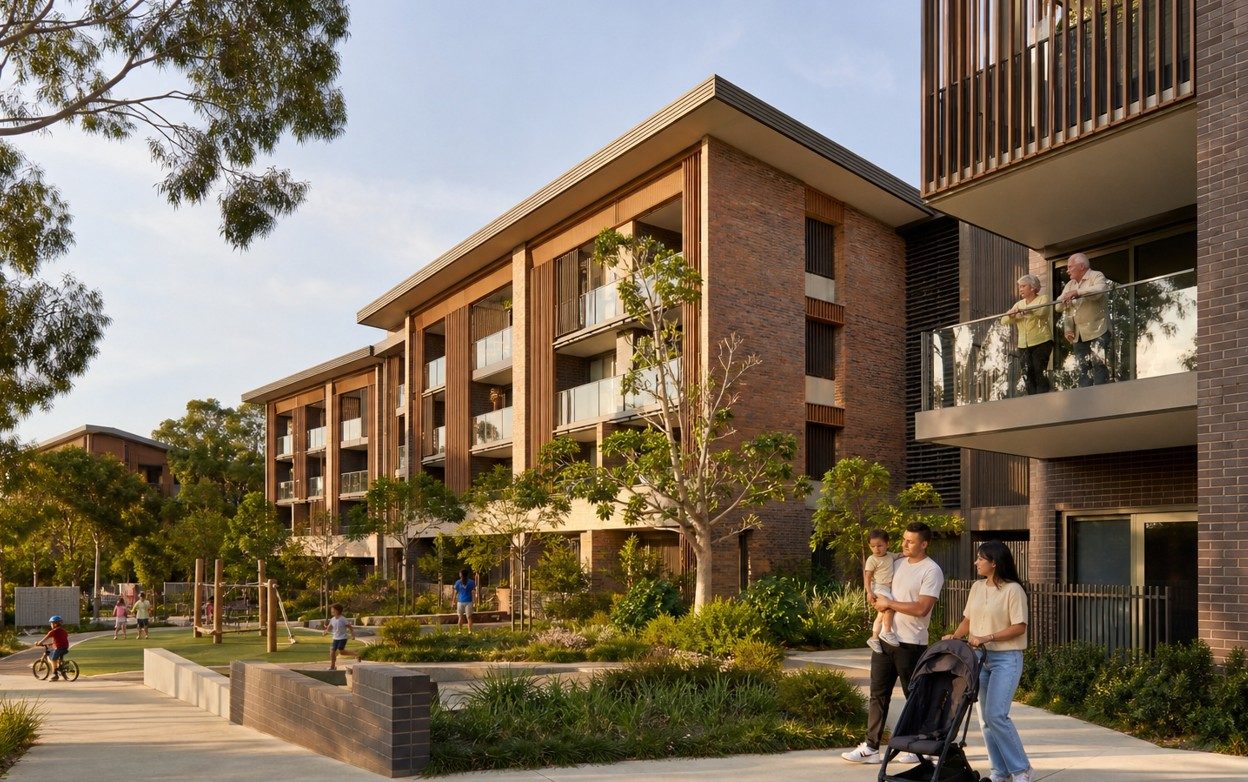
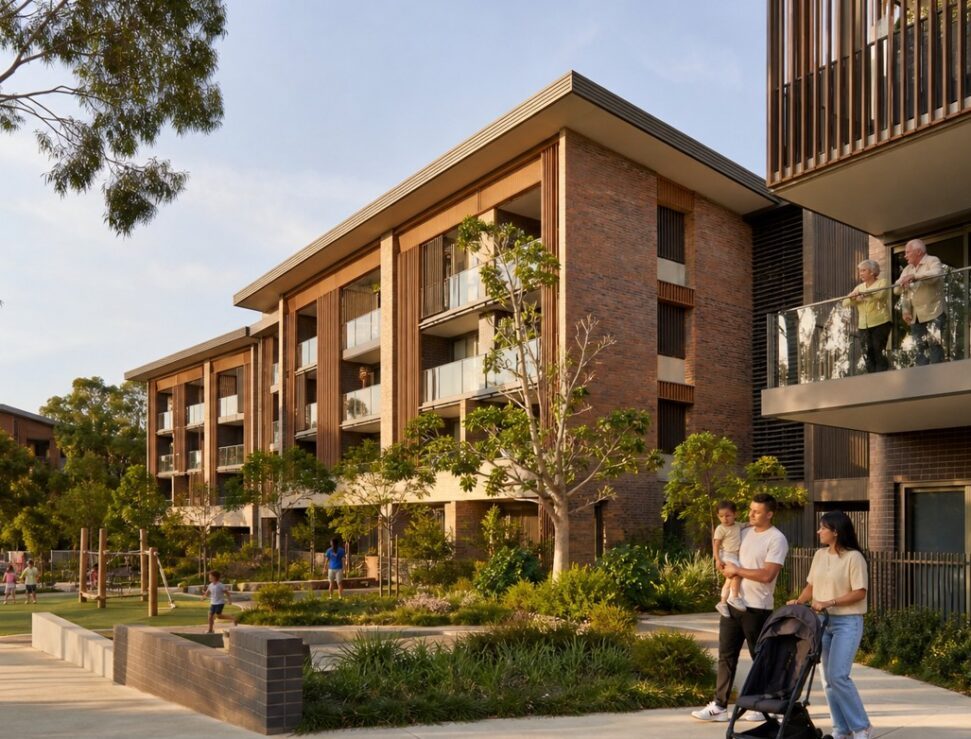
Please Note: The images in this post were created using AI and aren’t representative of actual Essence projects.