Seamus O'Farrell
Senior Project Manager
23 November 2026
Modular Building in Australia: A Welcome Change
Almost 20 years ago, I started my career as an electrician working on commercial construction projects across Victoria. Turning up to site, rain, hail or shine, carrying my tools and installing the materials needed to complete the job – an artisan approach.
Since then, my career has taken me off the tools into construction and project management, including over a decade in the UK working on large-scale mixed-use residential developments across London.
Returning to Australia, one thing stood out: for all the industry advances, the fundamental way we build had changed very little.
A Turning Point
Australia’s construction industry is at an important turning point. Housing demand, labour constraints, rising delivery costs and persistent productivity challenges are putting pressure on the industry to find more efficient and predictable methods of delivery.
Modern Methods of Construction (MMC) and, more specifically, Volumetric Modular Construction (VMC), have presented an opportunity to address some of the current inefficiencies faced across the construction industry.
VMC involves manufacturing building modules off-site in a controlled factory environment. Depending on the project, modules leave the factory substantially complete with walls, floors, ceilings, services, joinery, fixtures, finishes, and in some cases facade already installed.
This is more than a change in where construction occurs. It represents a shift from a largely site-based production model towards a coordinated process combining design, off-site manufacturing, logistics, and on-site assembly.
With a well-planned and considered approach, VMC can create efficiencies through:
- Parallel delivery: Site activities and module manufacturing occurring concurrently
- Repeatable manufacturing processes: Supporting productivity, and consistency
- Controlled factory environments: Strengthening quality management and creating safer work environments
- Greater programme certainty: Reducing exposure to weather and on-site disruption
- More efficient use of materials: Potential to reduce construction waste and generate more sustainable outcomes
- Earlier design resolution: Bringing key decisions forward in the project lifecycle, reducing risk of variations and cost risk down the track.
- Reduced Site Prelims: On site, fewer wet trades and a smaller workforce, resulting in less congestion, fewer deliveries, reduction in site area consumed by storage and worker amenity
Importantly, these outcomes aren’t automatic. The opportunity depends on the project type, design maturity, procurement strategy, manufacturing capability, logistics and, critically, the extent to which repetition can be achieved.
Australia’s opportunity to learn from global experience
Australia isn’t starting from scratch. Markets including Singapore, the United Kingdom, Sweden and Japan have already developed significant experience with modular building and manufacturing led construction. The aforementioned are significantly advanced in their modular capabilities, with refined production lines and established supply chains enabling VMC to be adopted at scale.
What international experience shows is that modular construction works best as an ecosystem rather than an isolated construction solution. Designers, manufacturers, contractors, clients, regulators and certifiers all need to work within a delivery framework that supports off-site manufacture and assembly from the outset.
For Australia, we have the benefit of learning from mature markets rather than reinventing the process.
What we’re seeing in practice
Our experience working with modular developers has reinforced one lesson in particular:
Successful modular delivery starts long before the modules arrive on site. Conventional construction programs may allow elements of design to continue developing during the on-site construction phase. Modular building requires a more developed approach. Structural interfaces, building services, fire and acoustic requirements, waterproofing details, finishes and module-to-module connections and most importantly, compliance must be resolved before modules are put into manufacture
A dynamic approach to project management must be adapted to ensure all key workflows are progressing at the required times. This often involves managing key stakeholders based overseas and navigating the complications that come with offshore supply.
Three things matter early
1. Design certainty
Decisions need to be made and coordinated earlier. Late changes, manageable during conventional construction, can have very different program and cost consequences once production-line manufacturing is underway.
2. Compliance
Certification, inspections and evidence of suitability need to be considered throughout design, procurement and manufacture, particularly where modules are manufactured offshore.
3. Logistics
Module dimensions and weights affect transport, permits, delivery routes, crane selection and installation sequencing. Logistics therefore must be considered much earlier in the project life cycle and not rely on a conventional approach. .
All three require close collaboration between the developer, design team, contractor, manufacturer, certifier and project management team.
Labour Efficiency and Greater Productivity
One of the advantages often attributed to modular construction is the ability to operate with a smaller on-site workforce. The opportunity is to use construction resources differently and more efficiently.
Factory manufacture allows repeatable activities to move into a controlled production environment while site establishment, excavation, foundations, basements and podium works can progress concurrently.
Rather than seeing modular simply as a way to reduce site labour, its greater potential lies in redirecting effort to where it can be most productive while reducing congestion and the volume of sequential construction activity required on site.
That distinction matters in an industry facing both labour and productivity pressures.
Where does modular create the most value?
VMC will not be the right answer for every development. Its advantages become most compelling where projects contain a high degree of repetition. Asset classes with strong potential include:
- Purpose-Built Student Accommodation (PBSA)
The greater the repeatability, the greater the opportunity to capture manufacturing efficiencies. Conversely, buildings with highly irregular geometries, limited repetition or requirements that continue changing late in design may realise fewer advantages.
Where to now?
Australia’s housing and construction productivity challenges require us to think differently about how projects are delivered. VMC is not a replacement for conventional construction, nor is it a solution for every building.
What it provides is an opportunity to rethink the construction process by bringing design, manufacturing, logistics and assembly together as one coordinated delivery model.
Over the years, I’ve enjoyed seeing construction methodology evolve from different perspectives, from my practical experience on the tools through to project delivery. That journey has given me a real appreciation for how modular construction has the ability to increase productivity and shape how we build moving forward.
The built environment has historically been slow to change. Yet the challenges facing Australia demand innovation. Modular construction provides an opportunity to build with greater efficiency, increased safety controls and more sustainably, all whilst achieving higher quality outcomes in a controlled manufacturing environment
Having seen the evolution of volumetric modular construction firsthand, I believe the industry is approaching an inflection point. Regulatory frameworks are improving, developer confidence is growing, manufacturing capability is expanding and the lessons learned from early projects are creating increasingly repeatable delivery models.
For an industry facing increasing pressure to deliver more efficiently and sustainably, VMC is a welcome change.
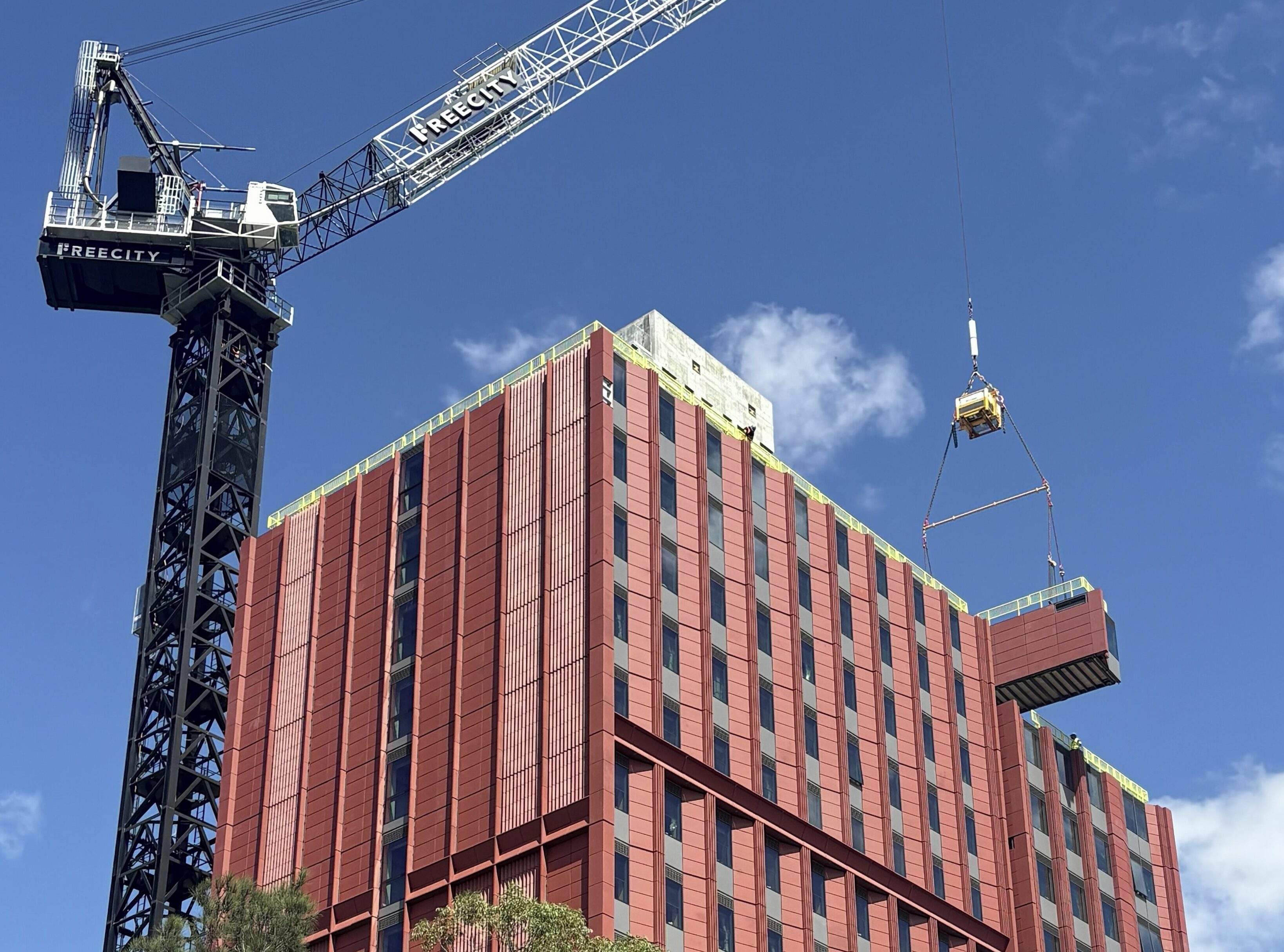
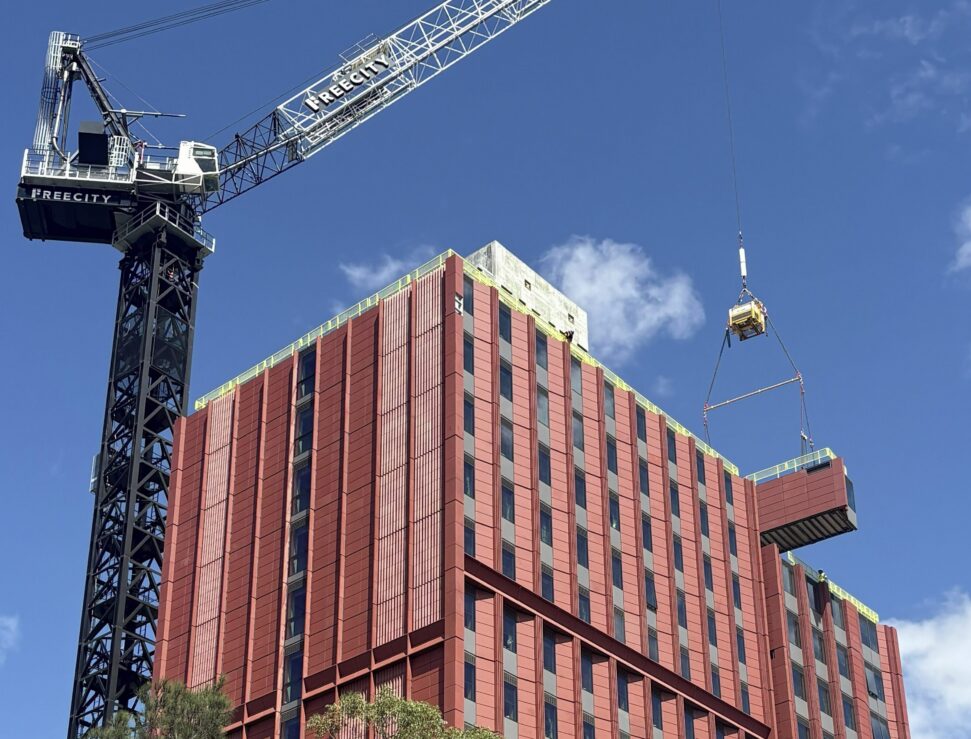
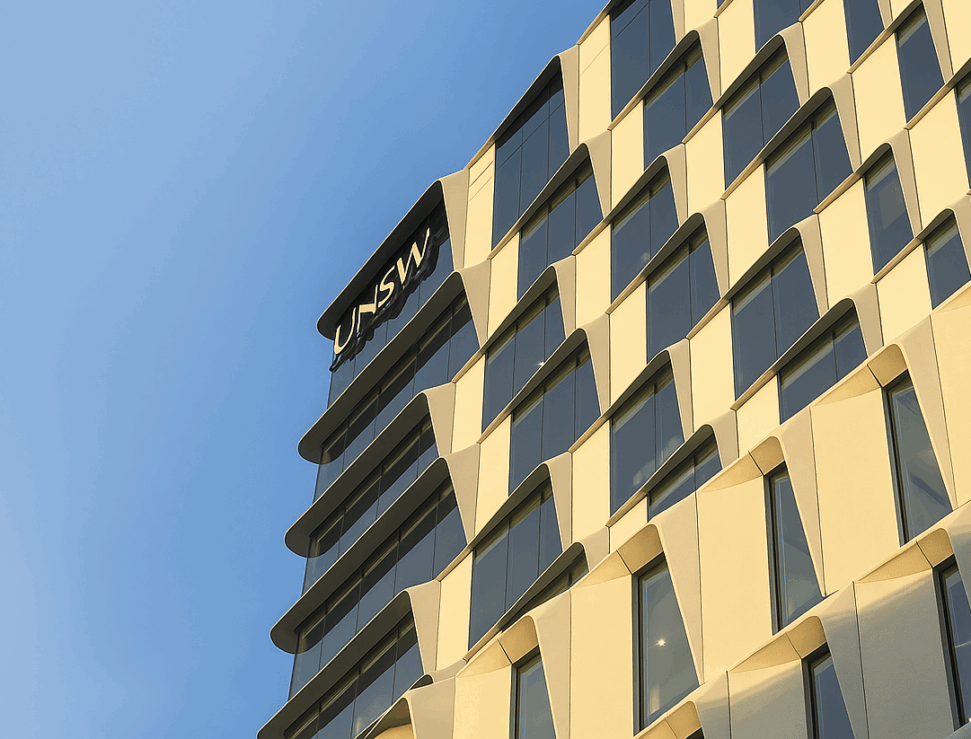
Project pictured: Freecity, Herring Road, Macquarie Park